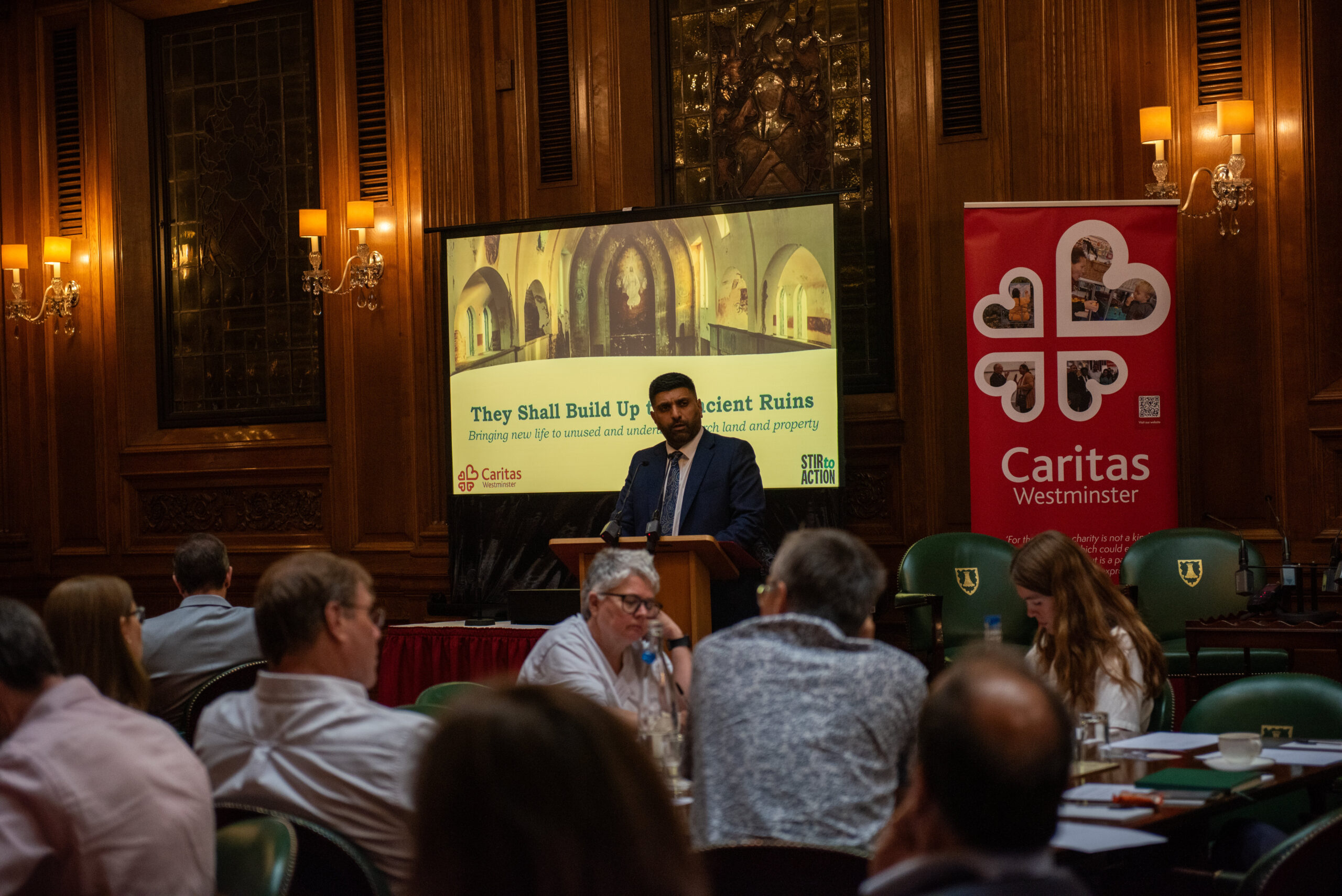
In his opening speech at ‘They shall build up the ancient ruins’ on 14 July 2025, Lord Khan of Burnley, Minister for Faith, Communities & Resettlement, welcomes the vital role that Christian churches play in supporting local communities, and introduces his new ‘Common Ground’ initiative. Read the full transcript below.
Good afternoon, it’s a pleasure to be here. Thank you Richard and everyone at Caritas Westminster for the work you do and for bringing us together today. Friends, in the commercial world, we often hear major retailers described as ‘anchor stores.’ They’re more than just shops; they’re cornerstones of our town and city centers, driving footfall, attracting other businesses, and helping local economies thrive.
So when one closes, it’s not just the loss of a retailer. It’s rightly felt as a major blow to the community; a sign that something at the heart of local life has shifted. But there are other anchors in our communities, too; equally vital, though we don’t always talk about them in quite the same way. The local GP surgery, the chemist, the village pub, the community hall.
These are places of connection, support and belonging. And when they are lost, the impact on community wellbeing is deep and lasting. Places of worship and their associated buildings are vital local anchors too. Churches — alongside our synagogues, mosques, temples and gurdwaras — are deeply woven into everyday life. They serve people of all faiths and those of none. They are first and foremost places of prayer and faith, often rooted in centuries of tradition — but they offer much else too.
Anyone involved in local life knows just how essential these spaces and the people who sustain them truly are. They run schools and toddler groups, they support foodbanks, they tackle homelessness, they offer comfort to those who are isolated or struggling. The truth is, without them, much of our local life simply wouldn’t function. And their contribution isn’t just welcome; it’s essential.
Take [Caritas] Bakhita House, named after the patron saint of victims of Modern Slavery. For over a decade, it has offered not just a safe house, but life-changing support to more than 200 women and their children who have been trafficked, enslaved or exploited. This readiness to stand with the most vulnerable over many years is a powerful example to us all.
For centuries, churches have stood at the heart of our cities, towns and villages. Christian worship remains central — but their role has evolved, shaped by the changing needs of the communities they serve. Today, churches are lifelines, often in ways we don’t expect: from the post office in St James’ Catholic Church in West Hampstead, to the volunteer-run community shop in Ilmington, Warwickshire, set up in a former Catholic church now owned and operated by the people it serves. It’s a co-operative run by the community, for the community.
These are just two examples, but they speak to a much wider truth that places of worship are not relics of the past, but living, breathing assets in the present. They remain places of warmth, welcome and belonging, just as they always have. But today they also deliver essential services, meeting daily needs, reducing isolation and strengthening local life.
They are also often adaptable, practical spaces, providing venues for events and public gatherings that serve worshipers, the wider community, and visitors alike. Friends, when the Cambridge Community Circus needed a space to practice — one with a high ceiling, of course — they didn’t turn to a local gym or theater; they turned to St George’s Church in Chesterton.
The troupe now uses a space five times a week, offering affordable classes and drop-in sessions.It’s more than a rehearsal venue; it’s a community hub, welcoming, inclusive and thriving. St George’s is a powerful example of how smaller places of worship essentially, especially in rural areas, can meet not only spiritual needs but creative ones too. By opening their doors to new possibilities, they help strengthen the bonds that hold communities together.
These spaces also support local economies. When community businesses co-locate with much-loved places of worship, like the Ilmington Community Shop, the impact can be significant. These venues offer secure, central places and spaces to trade, increase footfall, and new income streams that help sustain these historic buildings for generations to come.
Of course, co-locating a business within an active place of worship is not simple. Unlike conventional community owned ventures, it comes with a unique challenge: adapting heritage buildings, retaining volunteers, and keeping communities engaged.But when done well and done sensitively, the reward for both place and community can be truly transformative. According to the National Churches Trust, in 2021, the annual value of church buildings in the UK was estimated at an astonishing £55 billion. That’s a hugely powerful reminder of their contribution; not only spiritually but socially and economically, too.
This impact is perhaps most visible in our cathedral cities. Cathedrals are a cornerstone of England’s heritage. As the late philosopher Roger Scruton said, they are a symbol of continuity in a rapidly changing world. Each year, up to 9.5 million people visit our cathedrals, supporting local hotels, restaurants, shops and services. Recent research shows that England’s 42 Anglican cathedrals generate £235 pounds annually for local economies, through jobs, tourism and cultural activity.
They also boost the appeal of towns and cities, serving as catalysts for regeneration and investment. Take Blackburn’s Cathedral Quarter, a £34 million regeneration project that’s helped to completely revitalise the town center. It has created new public spaces and gardens linking the cathedral to a modern cathedral square, complete with offices, restaurants and a hotel. The result is a vibrant mixed-use area that boosts tourism, brings in business, and improves quality of life for residents and visitors alike.
Or take Liverpool, home to not one but two iconic cathedrals. The Liverpool Metropolitan Cathedral was recently awarded Grade I Listed status, recognizing its striking design and national importance. But it isn’t resting on its laurels; it’s developing a new welcome center to enhance the visitor experience, improve accessibility, and better utilise existing space. This is part of a wider masterplan to strengthen its role not just as a place of faith, but as a centre for heritage, arts and community.
And like their Anglican neighbours, they’ve embraced innovation to increase their income and reach; the crypt beneath the cathedral hosts everything from conferences to the world-renowned Gin festivals — carefully located away from the main worship area, preserving the sanctity of the sacred space. It’s a great example of how faith institutions can honour tradition while embracing innovation, serving their communities in new, creative and sustainable ways.
Of course, securing the support of both the congregation and the wider church community is vital. After all, while many might welcome the filming of a Netflix blockbuster like The Crown at Ely Cathedral, they may question the idea of their church hosting regular silent discos.
So when we talk about places of worship — our churches, our cathedrals — we’re talking about more than beautiful buildings; we’re talking about the institutions that help our communities to flourish, and this is what we want for all our communities. Friends, over the past year, I’ve met faith leaders and volunteers across the country working tirelessly to protect what binds us — relationships, understanding and shared purpose — working across faiths and differences to help build stronger, more united communities.
This government is committed to building a fairer, safer and more resilient Britain where all communities can thrive. We are determined to reverse the years of failure and decline, but we know that takes time. Decades of underinvestment have deepened deprivation and stalled growth, especially in our most deprived areas. And that’s not right. Our new £1.5 billion plan for neighborhoods will invest up to £20 million over ten years in 75 communities, tackling root causes of decline and unlocking the potential of the places people call home.
This plan is built around three clear goals: building thriving places with stronger local economies and better infrastructure; [and] strengthening communities so people feel safe, connected and supported. Thirdly, empowering people, so residents have the tools and voice to shape their future, such as giving communities and businesses the right to rent long-vacant premises, reviving high streets with new community spaces, shops and vibrant local life.
But friends, we must now go further. We know we have to go further. To work with councils, communities and other key partners, to strengthen community cohesion and resilience, especially in the places which face the greatest risks and threats. I call this approach ‘common ground’: new ideas, initiatives, funding and programmes which bring people together in meaningful, effective ways. I hope to say more about this in the weeks to come.
Through work like this, we can build the foundations of a more inclusive and resilient society. Whether for worship, quiet reflection, essential services or community space, Christian churches have long played a vital role in supporting and strengthening local communities. And today, that continues in new and innovative ways. I look forward to hearing more about the ideas, insights and outcomes from today’s discussions, and how we can continue developing this important work.
Thank you.
Find out more about ‘They shall build up the ancient ruins’ and watch the video here.